
How Does Amazon Delivery Part Time Work?
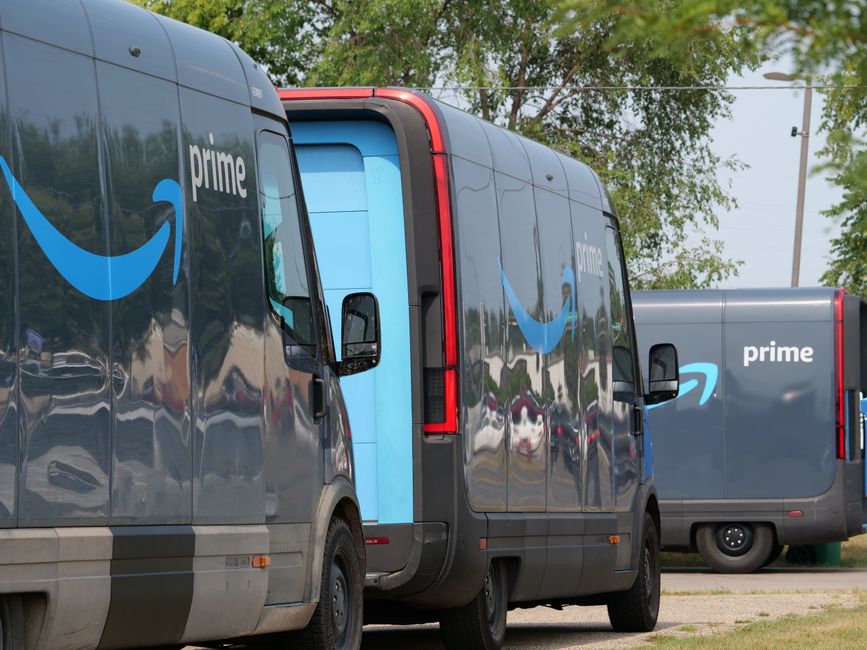
Amazon delivery part time can mean self-scheduled Amazon Flex blocks or employee shifts with a Delivery Service Partner (DSP). Flex earnings depend on local offers, hours, miles, and vehicle costs; the supplied sources do not establish a guaranteed Flex rate or block supply. To judge a block, include travel to and from the station, estimate business miles, and compare gross pay with vehicle costs and taxes.
How much can I make delivering for Amazon part time?
There is no reliable weekly figure in the available sources for part-time Amazon delivery. Flex pay varies with offers and completed work, while a DSP role is employment with pay and shifts set by the local delivery company.
The Bureau of Labor Statistics reports May 2024 median annual wages of $44,140 for light truck drivers and $37,130 for driver/sales workers. Those are employee-role comparison points, not Amazon DSP-specific rates or Flex earnings. The BLS also says most drivers work full time, and schedules can vary, including weekends and holidays.
Flex gross pay is only the starting point for a budget. For example, calculate weekly gross as the total pay for accepted blocks, then subtract an estimated vehicle expense based on business miles. The IRS says the 2025 standard mileage rate is 70 cents per business mile; parking fees and tolls can be added under that method. This is a tax deduction measure, not a promise that every driver’s actual operating cost equals 70 cents per mile.
| Weekly hours | Gross-pay calculation | Vehicle-cost estimate | What remains uncertain |
|---|---|---|---|
| 10 | Actual block pay earned in 10 hours | Business miles × $0.70, plus eligible tolls and parking | Offer rate, route miles, taxes, and weekly block supply |
| 20 | Actual block pay earned in 20 hours | Business miles × $0.70, plus eligible tolls and parking | Offer rate, route miles, taxes, and weekly block supply |
| 30 | Actual block pay earned in 30 hours | Business miles × $0.70, plus eligible tolls and parking | Offer rate, route miles, taxes, and weekly block supply |
This table is a planning framework, not an earnings forecast. The research does not provide a Flex hourly rate, route mileage average, or tax rate, so a precise take-home number would be invented. Actual-expense deductions may be available to eligible taxpayers instead of the standard mileage method; the IRS lists gasoline, oil, repairs, insurance, and license plates among expenses that can enter that calculation.
Can you make $500 a week with Amazon Flex?
Making $500 in a week with Flex depends on the pay and number of blocks available, and the supplied sources cannot confirm that the target is attainable in a particular market. Divide $500 by the actual average gross hourly amount shown in the offers you can secure to estimate the hours needed, then add the cost of vehicle use and taxes to assess take-home pay.
For instance, if you are comparing offers, do not treat a displayed block amount as an hourly wage until you divide it by the full time commitment. Include the trip to the station, delivery time, and the return drive if it is part of your workday. A target can look reachable on gross pay and fall short once miles and unpaid travel are counted.
Availability also matters as much as the arithmetic. If offers are sparse, rapidly claimed, or poorly timed for your other responsibilities, the hours on a spreadsheet will not translate into paid work. The provided research contains no local Flex block data, so a $500 weekly plan should be treated as variable, not guaranteed.
Can you make $1,000 a week with Amazon Flex?
A $1,000 Flex week cannot be promised from the available evidence; it would require enough well-paid blocks, sufficient local supply, and enough time to complete them. The sources do not give Flex rates or weekly caps, so any exact hours estimate would rely on unsupported assumptions.
Use real offers to test the target. Divide $1,000 by the gross hourly rate you actually achieve, then check whether that many hours and blocks appear in your area. Recalculate using the full time commitment, including station travel, and subtract estimated vehicle costs before calling the result take-home pay.
For a comparison with employee delivery work, the BLS reports a May 2024 median annual wage of $44,140 for light truck drivers. That national occupation figure is not a weekly Flex rate, and BLS wage estimates exclude self-employed workers. It cannot establish that a Flex driver can reliably gross $1,000 each week.
Can you work part time for Amazon delivery?
Yes, part-time delivery can take the form of Flex blocks or DSP shifts, but the schedule works differently in each arrangement. Flex lets drivers choose from available offers; DSP schedules and pay depend on the local delivery company hiring for the role.
Flex fits a schedule only when suitable blocks are available when you can work. A DSP role is an employee job, so confirm the local employer’s shift lengths, weekly hours, pay, and weekend expectations directly. The BLS notes that most delivery drivers work full time and some work more than 40 hours per week, with schedules that may include weekends and holidays.
Judge every Flex block with the same four inputs: offered pay, total time, business miles, and out-of-pocket costs. First, add the drive to and from the station to the delivery time. Next, divide block pay by total hours for an effective gross hourly figure. Then divide pay by total business miles for a rough pay-per-mile comparison. Finally, estimate vehicle expense using the IRS method or your eligible actual expenses, and account for taxes separately.
A block with higher gross pay can still compare poorly if it requires more miles or a long station commute. The IRS mileage method provides a consistent tax calculation, but your own fuel, repairs, insurance, and other costs determine what the work leaves you. Do not count unpaid travel as free time.
Frequently Asked Questions
How many hours can you work part time with Amazon Flex?
The supplied sources do not specify a weekly Flex hour limit or guarantee a certain number of available blocks. Your workable hours depend on offers in your area and whether their times fit your schedule.
Is Amazon Flex pay worth it after gas and car expenses?
It depends on the block's pay, total route and station travel, and your vehicle costs. The IRS standard mileage rate for business use in 2025 is 70 cents per mile, a useful tax deduction measure but not a guaranteed estimate of your actual cost.
What is the difference between part-time Amazon Flex and a part-time DSP driver job?
Flex uses delivery blocks you select from local offers and requires your own vehicle. A DSP driver is an employee of a local delivery company, so shift availability and pay depend on that employer; BLS employee wage data offers context, not a direct Flex earnings estimate.
Are Amazon Flex delivery blocks available every week in my area?
The supplied research does not report block availability by location or week. Treat availability as uncertain and do not build a fixed household budget around unconfirmed offers.
Sources
Read next

What Window Covering Works Best for a Sliding Glass Door?
Compare exterior solar screens, vertical cellular shades, and thermal curtains for summer heat, winter drafts, daylight, and easy access.

What Is the Nursing Degree Salary?
The RN median was $93,600 in May 2024, but wages vary by role, location, setting, schedule, and experience.

What Is the Travel NICU Nurse Salary?
Travel NICU nurse packages reached $4,368 weekly in listings, but annual and take-home earnings depend on paid weeks, costs, and tax eligibility.